Black pepper and olive oil: The ingredients that super-charge the nutrients you get from food
Seasoning your food or adding a dressing to a meal could help you absorb more vitamins and minerals. Scientists believe it could boost the nutrients we get from food.
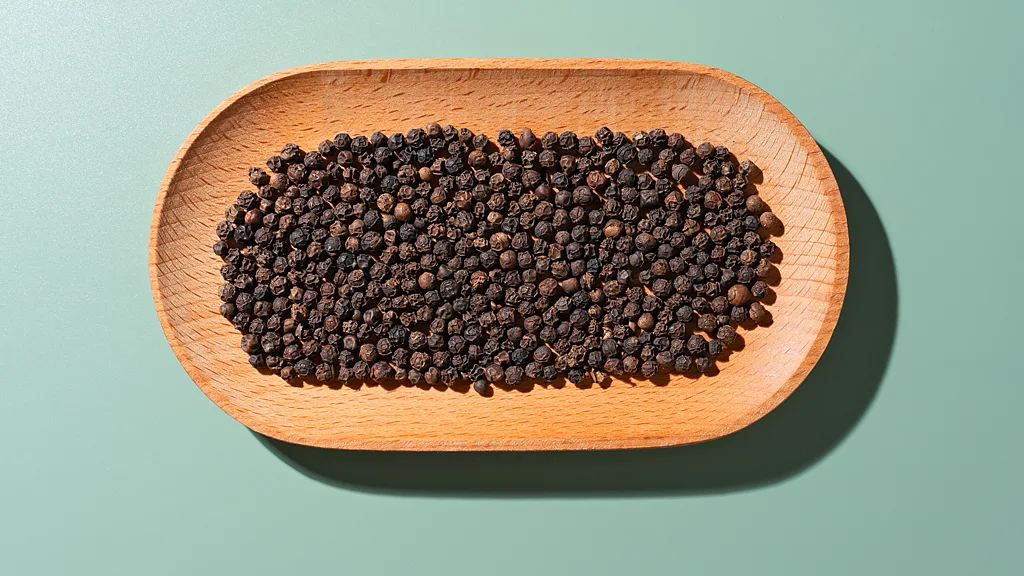
It’s been a prized spice for thousands of years due to its ability to bring flavour to even the blandest of foods. Black pepper was first cultivated in India more than 3,500 years ago, where the plant that produces the spice is native; it became one of the most valuable commodities of the ancient world. Today most of us sprinkle it on our food as a seasoning, often without even thinking.
But adding black pepper to your meal might be doing more than simply adding flavour. It might be boosting the amount of nutrients you are getting from your food.
Peppercorns contain a chemical that helps vitamins and other nutrients be absorbed more easily into the bloodstream. Tiny droplets of fat found in milk and olive oil have also been found to improve the availability of nutrients to the body. Scientists are now trying to harness these effects to develop new types of fortified foods and help people who struggle to absorb the nutrients they need to stay healthy.
One of the problems we face with even the most nutrient-rich foods is whether our bodies are able to extract the vitamins and minerals as they pass through our digestive system. Take sweetcorn, for example. Sweetcorn kernels are undoubtedly packed with goodness – high in fibre, protein, vitamins and micronutrients like potassium. But anyone who has peered into the toilet bowl after a meal of corn kernels will wonder how much of that nourishment they have absorbed. The waxy outer casing of the kernel is hard for our bodies to break down, especially if we don’t chew it properly first.
“When you eat sweetcorn [without adequately chewing] it passes all the way through your gastrointestinal tract and ends up in your toilet, and all the nutrients inside are still trapped in there,” says David Julian McClements, professor of food science at the University of Massachusetts, US.
Luckily, by chewing sweetcorn, we can free the nutrient filled flesh inside so it can be digested.
What is the matrix?
This extreme example illustrates a simple fact about food – for nutrients to be digested and used by the body, they must first be released from the complex matrix of proteins, carbohydrates, fats and other components that give food its texture and structure.
There are also other barriers that can prevent vitamins from being digested. After being released from the food matrix, vitamins must be able to dissolve in the gastrointestinal fluid. They must then be carried to the small intestine, where special cells called enterocytes then carry them across into the bloodstream.
However many vitamins – including A, D, E, and K – which are classed as oil soluble vitamins – need help to be transported to their destination.